Worldbuilding / creative development
ODDKIN
A game studio that so far exists as a website you can play with
ODDKIN is the idea of a small independent game studio with a mischievous streak: strange creatures, living worlds, and one rule: fun decides where AI belongs. It has not shipped a game. What exists is its identity and its website, built so the studio’s personality could be felt before any game is made.
- My part
- Concept, brand, writing, design and all of the code
- Status
- Website live; no games shipped yet
- Stack
- React, TypeScript, Vite, Remotion, WebGL
- Since
- 2026
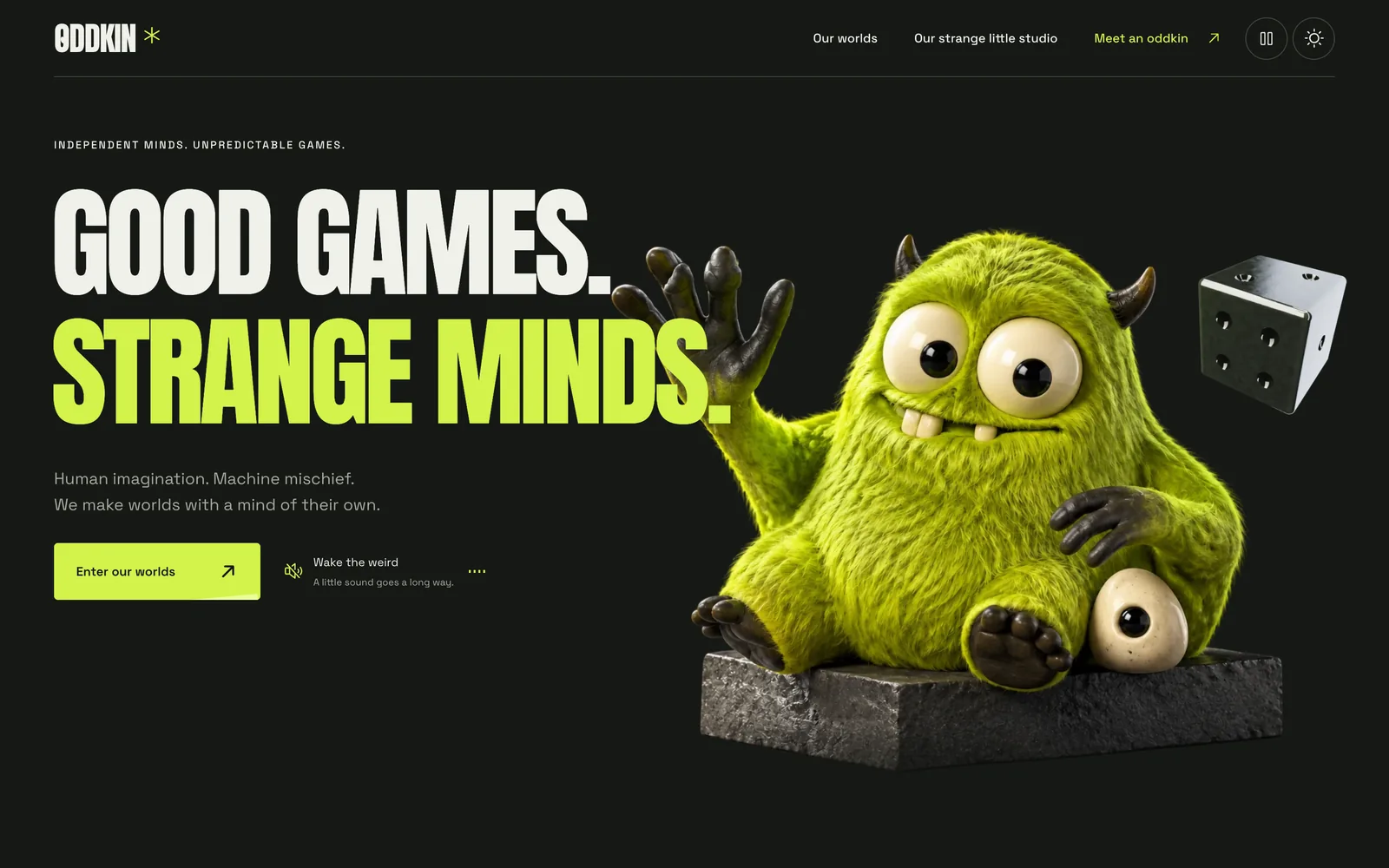
A studio that starts as a website
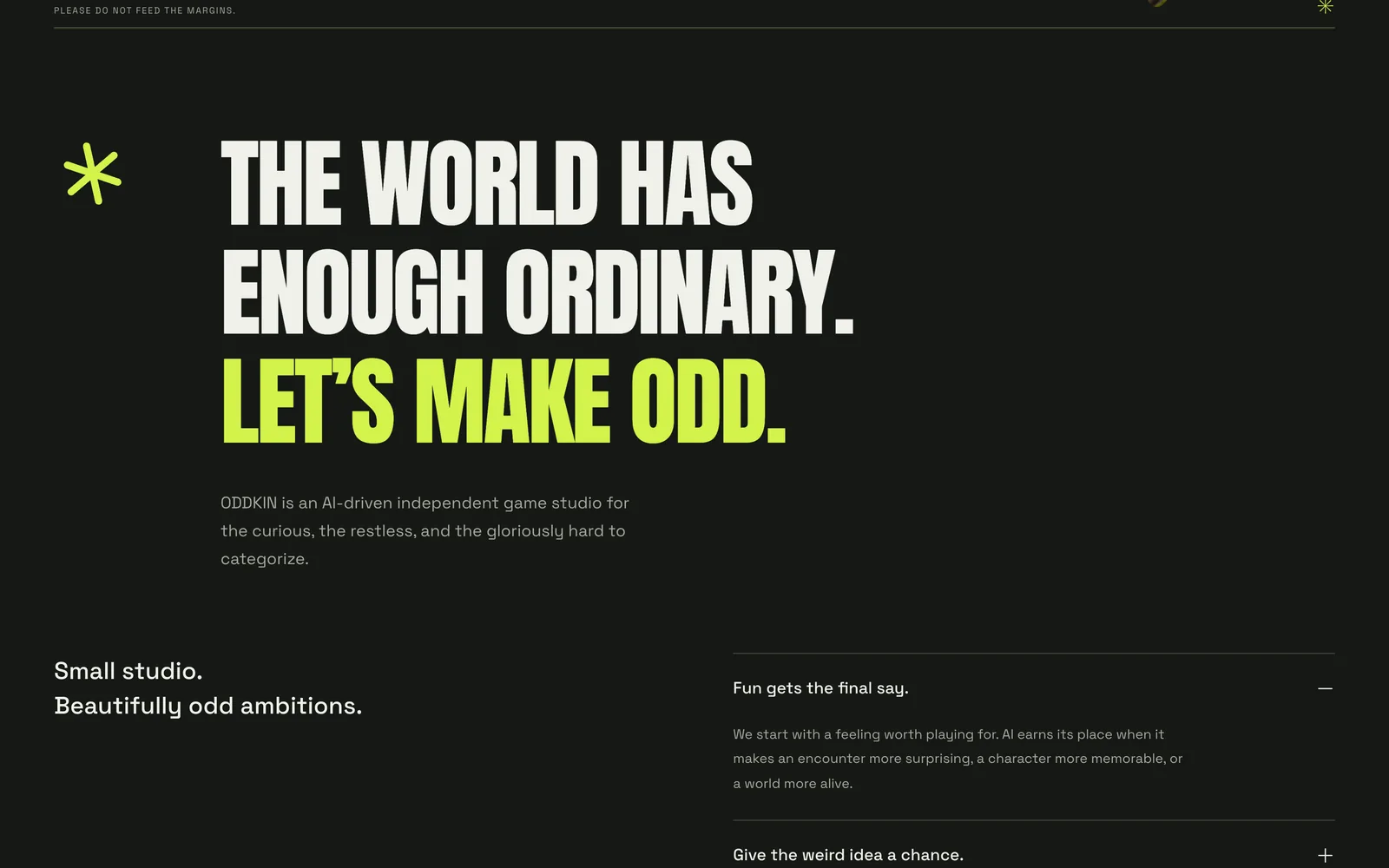
ODDKIN is a concept for an independent game studio that works with AI under human direction. The name means a family of odd beings: the characters, the people who make them and the players who find them. Its line is “Good games. Strange minds.”
Instead of a pitch deck, I built the studio’s public face first: one page that introduces two game worlds as concepts, says what the studio believes and lets a visitor talk to its mascot. It never claims what does not exist: no released games, no team, no funding, no player community.
Grub, the dice and the acid green
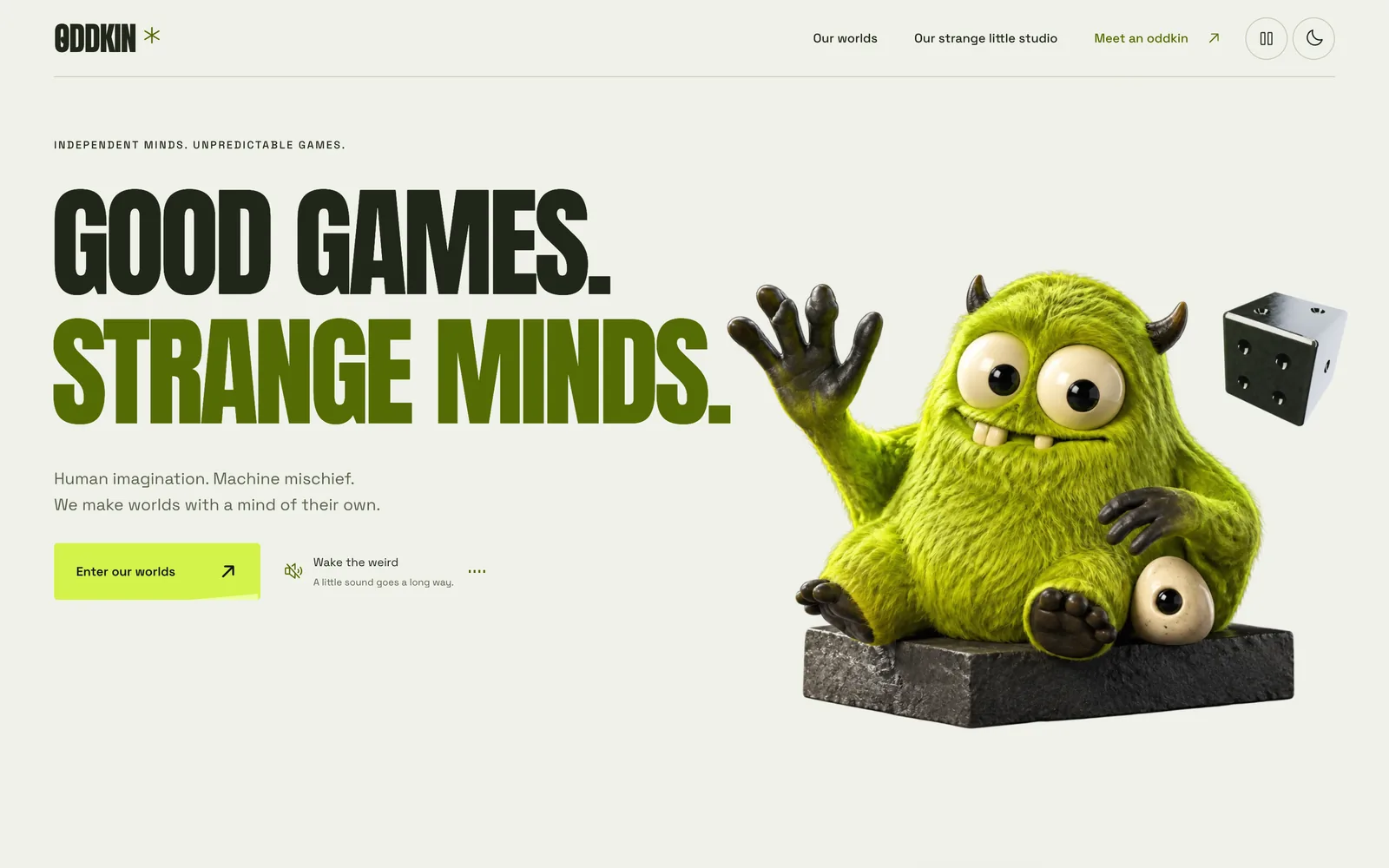
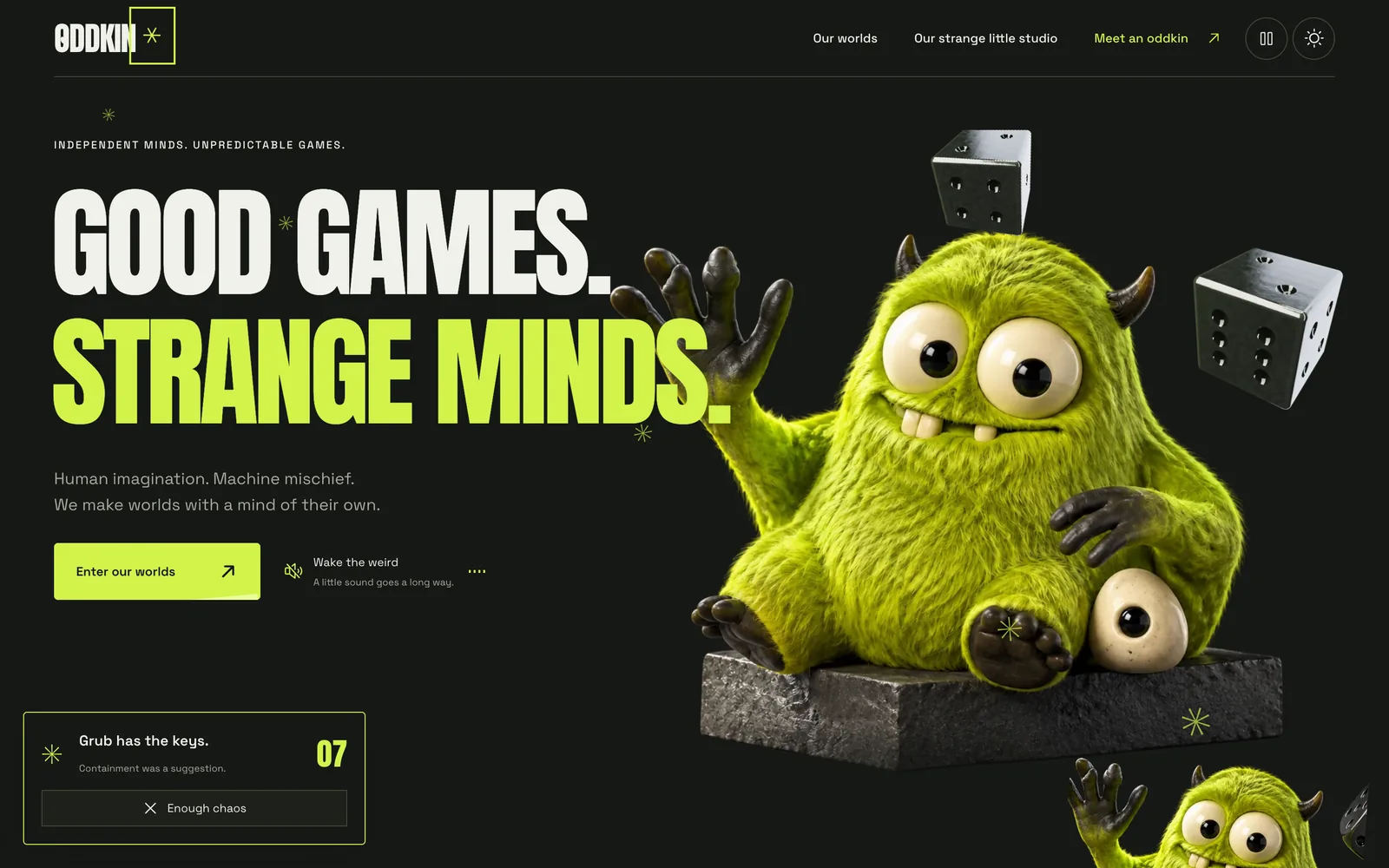
The brand has one face: Grub, a squat, shaggy, acid-green creature with enormous ivory eyes, two uneven teeth and tiny horns, sitting on a block of graphite with a floating black die. He is weird, not scary, and he has terrible business instincts.
The palette is three roles: graphite, ivory and acid green, in a dark theme and a light one. Type is tall and poster-like. The voice gets its humour from concrete situations, never from technology promises: a creature eating a complaint, a forest holding a grudge. The artwork was generated from my written briefs with an AI image tool, then edited and cut out by hand, with every prompt recorded in the repository.
Walking down the page
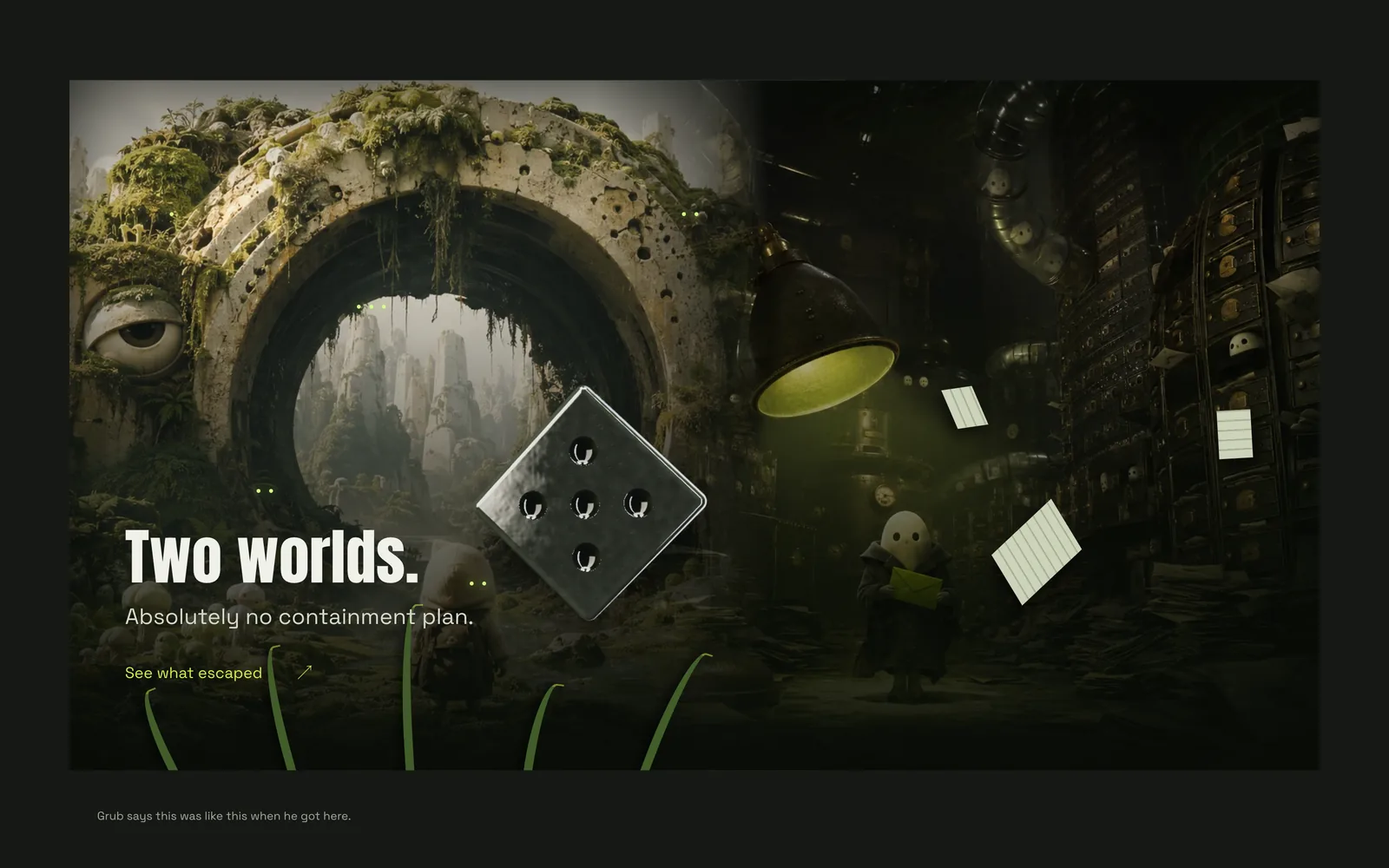
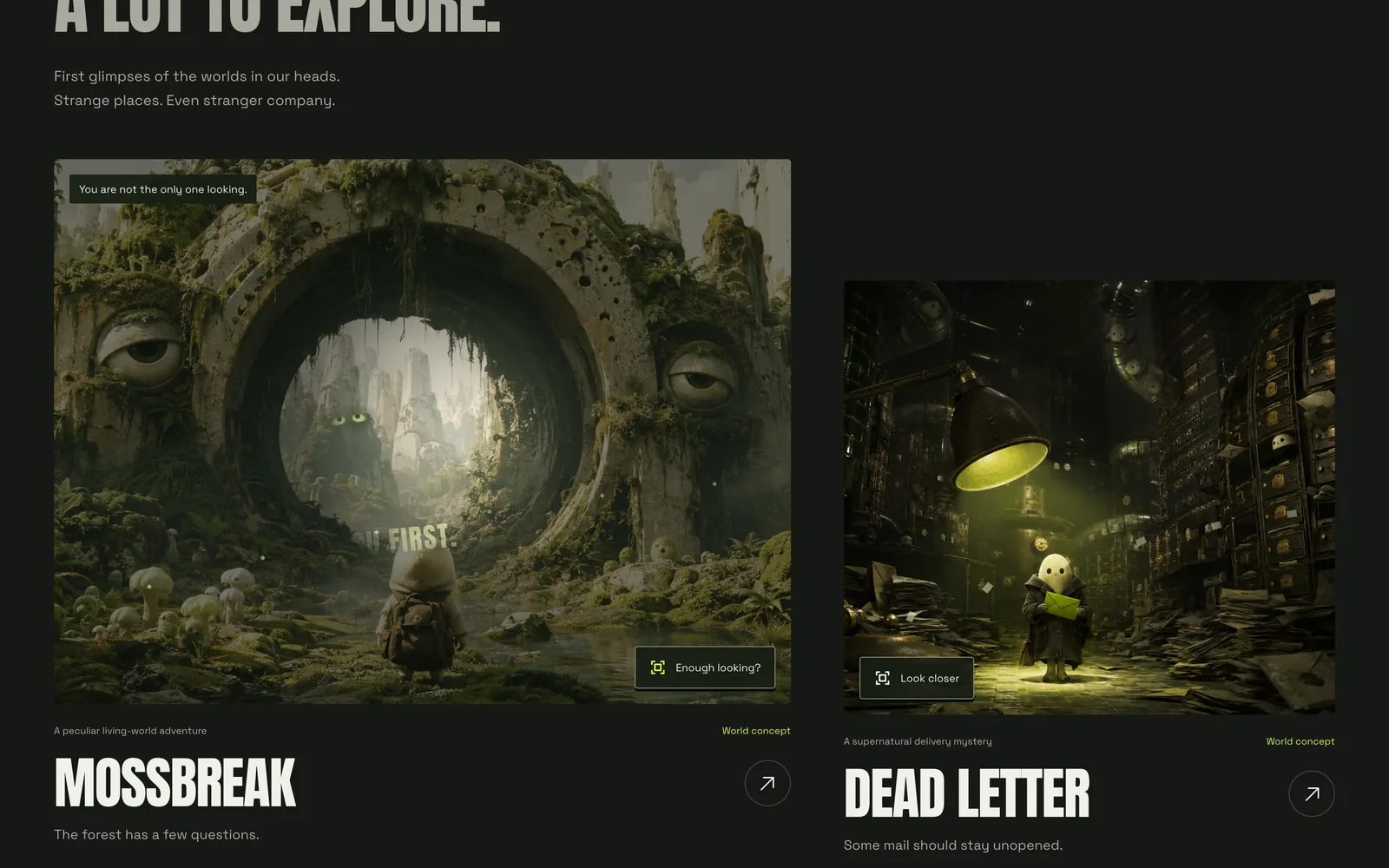
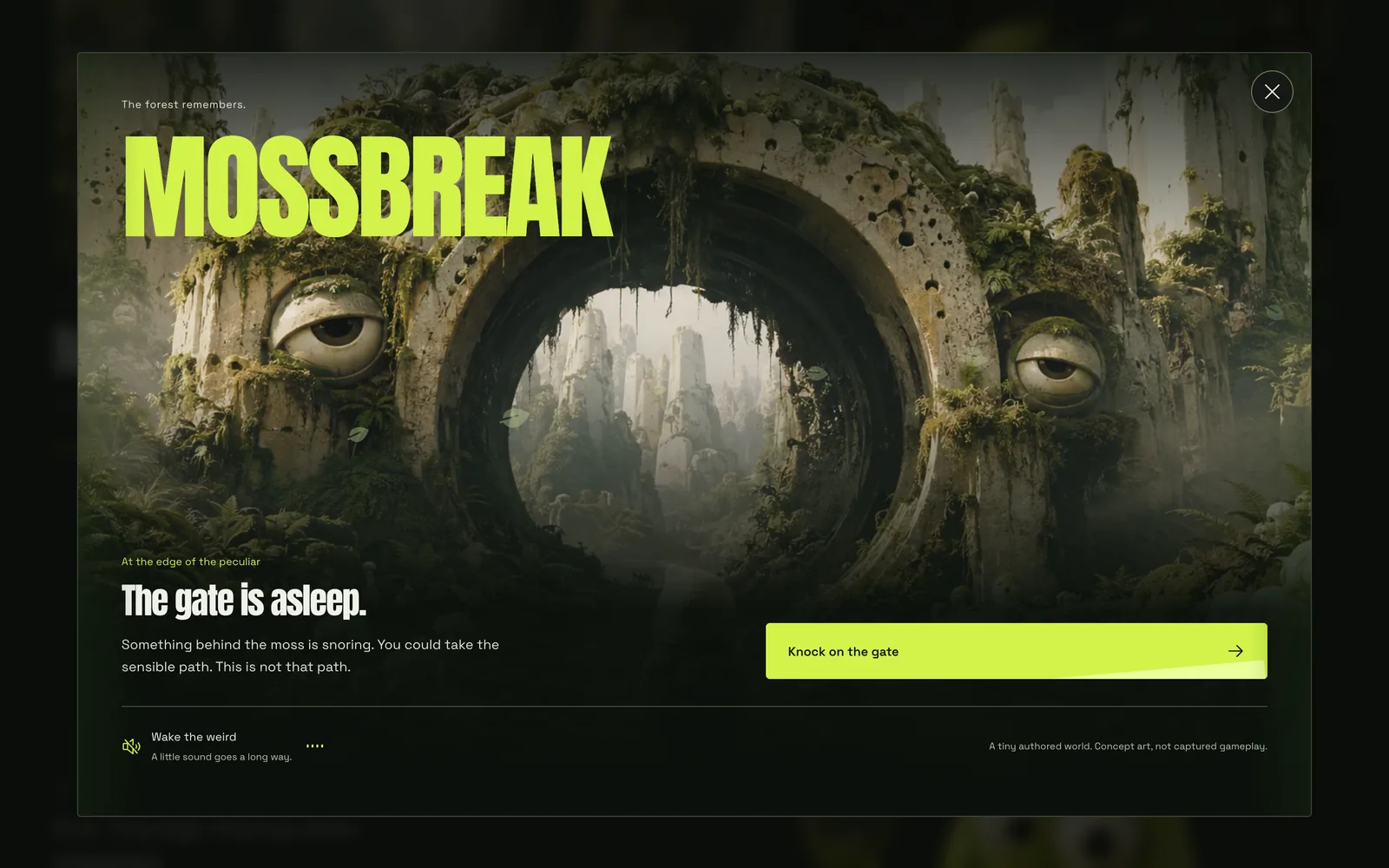
The page reads as one continuous visit. It opens on Grub waving beside the headline while the die turns in the air. As you scroll, the die escapes, falls and cracks the page open to reveal the two worlds behind it: MOSSBREAK, a forest that remembers what you did, and DEAD LETTER, a haunted post office where you are the new courier. Each is labelled a concept, and “Step inside” opens a short illustrated story with two outcomes.
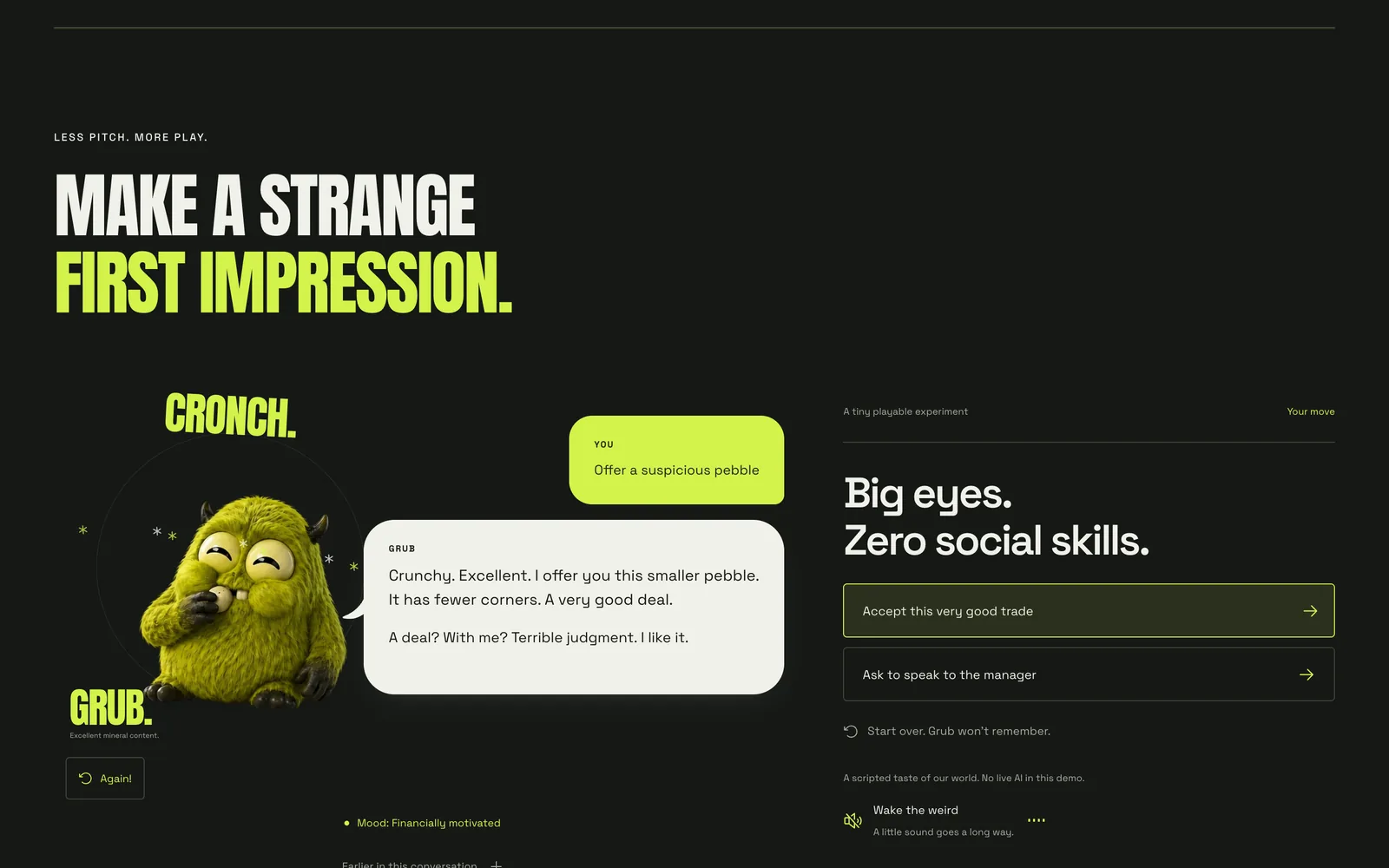
The visit ends with the encounter: a scripted conversation where you offer Grub a pebble or wave at him and reach one of four endings, each unlocking a poster to download. The conversation is written by hand, and the page says there is no live AI in it.
- Sound is opt-in: nothing plays until you press “Wake the weird”.
- Three hidden secrets reward curious visitors.
- Holding the asterisk in the header for a second starts ten seconds of Chaos Mode.
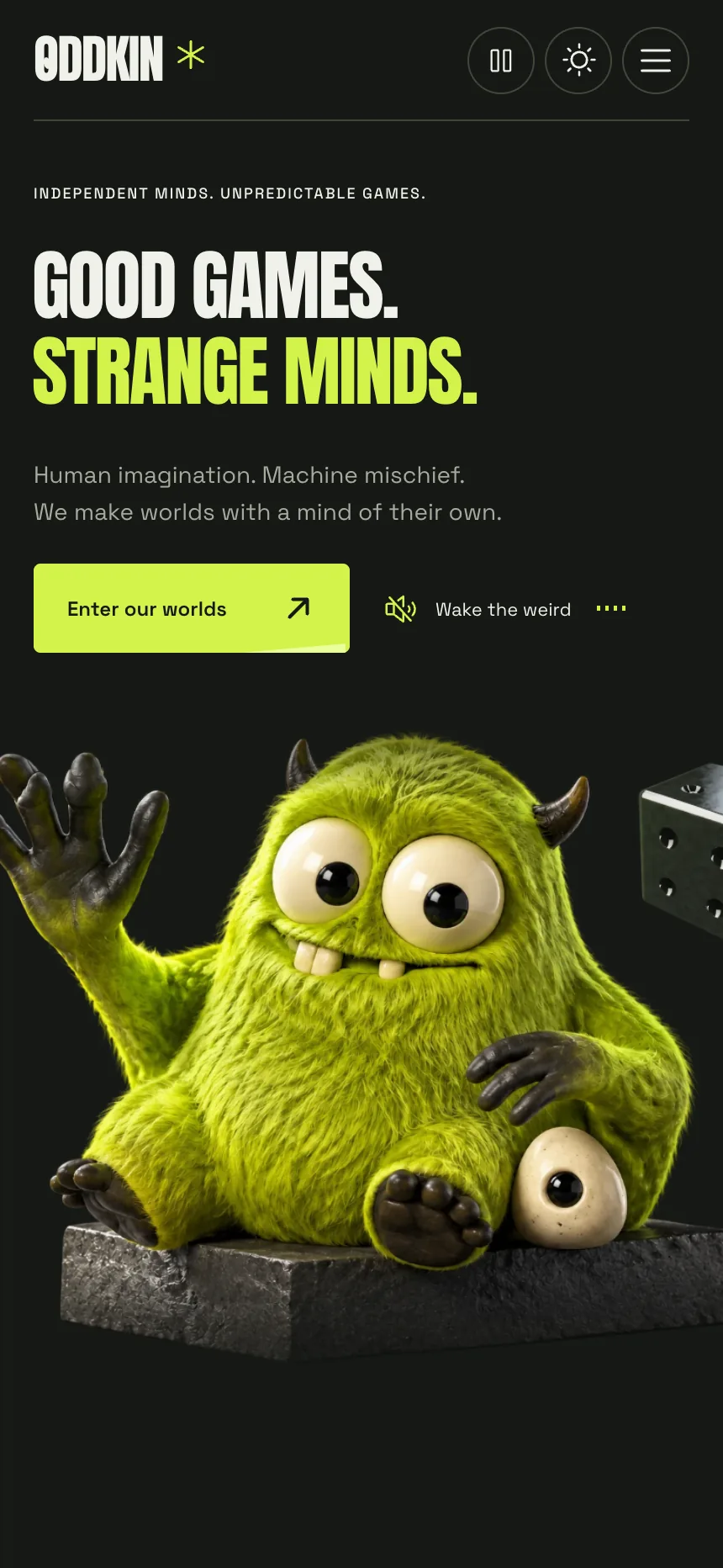
- Everything works with a keyboard, with reduced motion and on a phone.
Built in two rounds
I planned the page as two short lists of stages and shipped one stage at a time, with browser checks and a screenshot for each. The first round turned a landing page into a small playable world: Grub notices you, original sound, hidden oddities, the world stories and the posters.
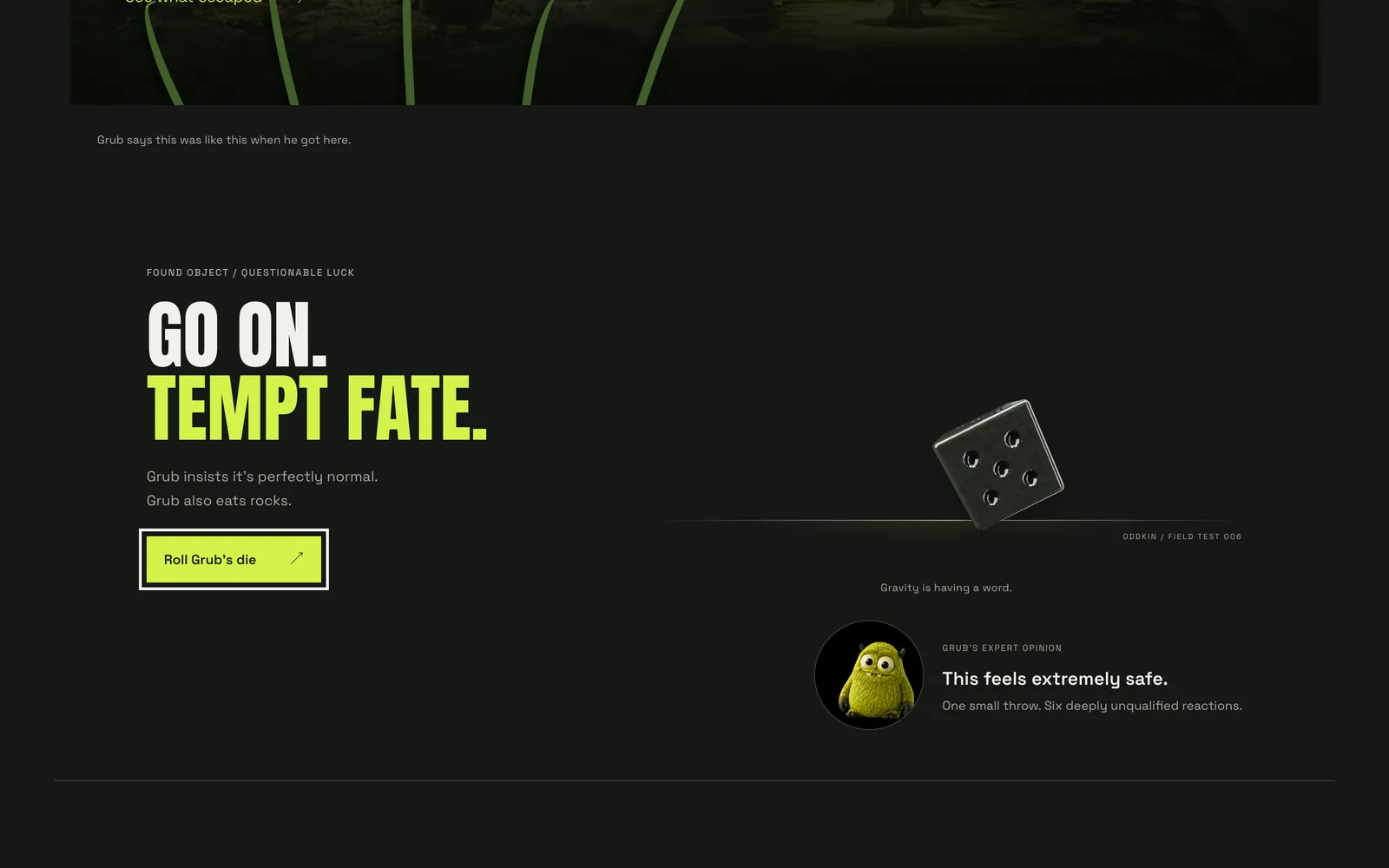
The second round, ODDKIN Escape, is about the characters taking over the website: the die breaking out of the scroll, a playable die, cinematic transitions into the worlds, Grub peeking over a section edge, a hover light that reveals secrets, type that reacts to his mischief, positional sound and Chaos Mode. Both rounds are complete and live.
Making a still picture move
Grub started as a single still image, so most of the animation work was about bringing a picture to life without it looking like a cutout. In the opening, a thin animated layer drawn over the artwork makes him breathe, glance, twitch his horns and wave, while the base he sits on stays still. The die is drawn in real time, a true cube with carved pips and studio reflections.
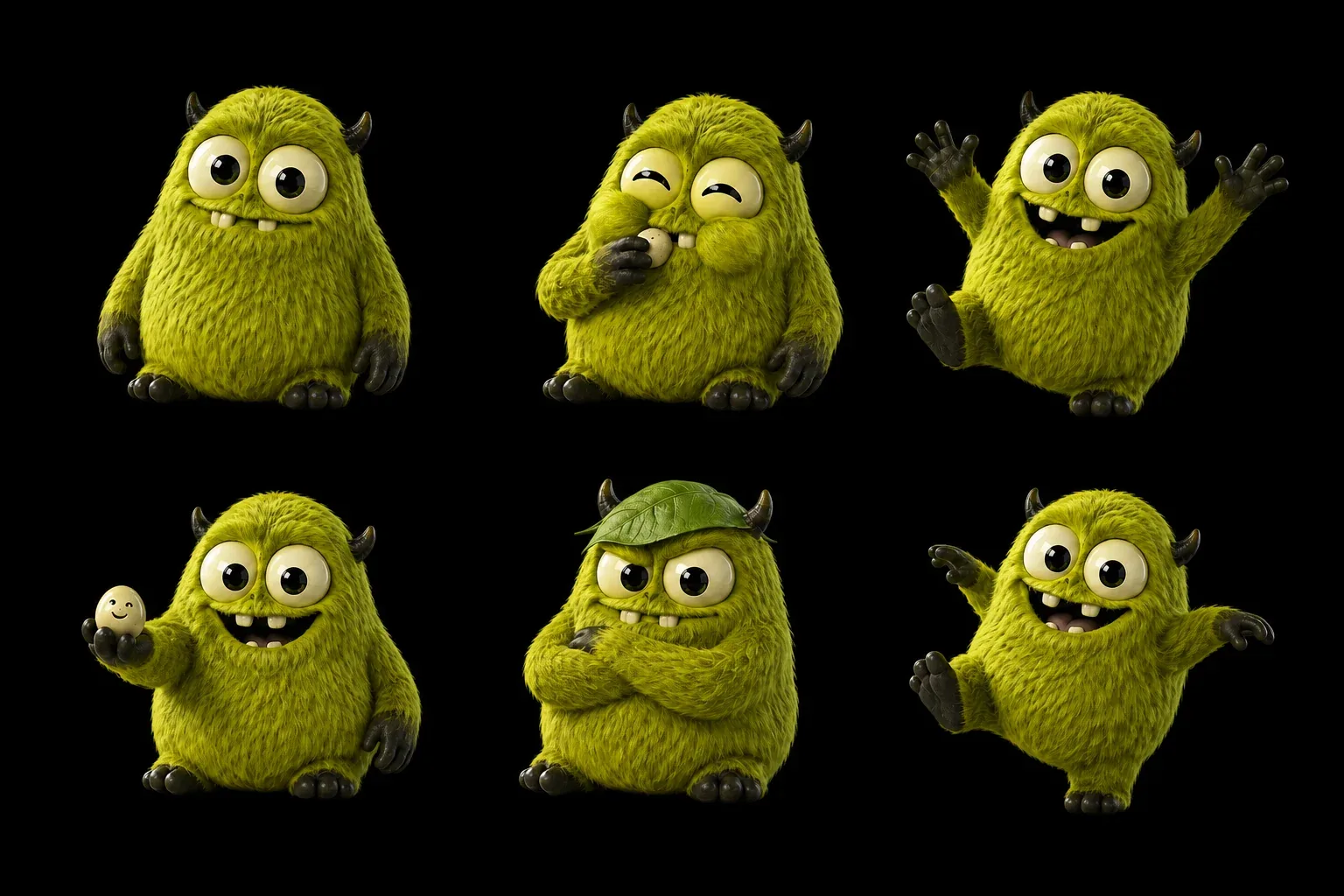
For the conversation, I generated a sheet of six expressions and used Remotion, a tool for building animation out of code, to turn each reply into a short frame-by-frame reaction. Animations pause when the page is hidden, respect reduced-motion settings and fall back to the still image when the graphics hardware is unavailable. Browser tests compare real rendered pixels to prove the motion happens.
The experiments I did not ship
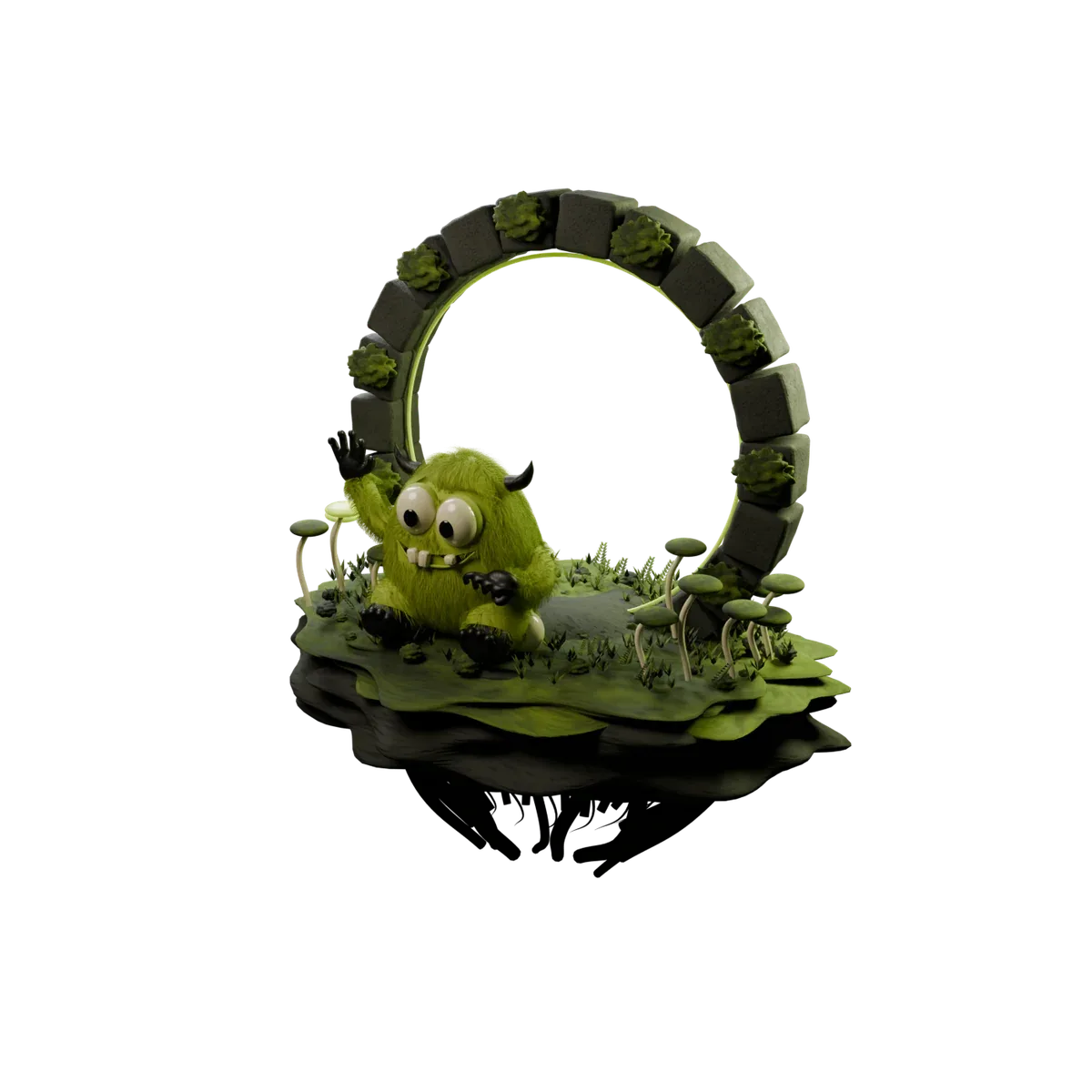
Two further directions live in versions of the code that were never published. “Pocket universe” is a complete alternate website in real 3D: I modelled Grub, a floating moss island, a stone portal, a mailbox and a sealed envelope in Blender and built a continuous camera journey through them with Three.js, ending at Grub for the same conversation.
“Continuity” kept the flat page but gave the visit consequences: finishing a world’s story leaves a keepsake on the page, a designer’s workbench appears in the studio section, and the final poster records the whole journey. Neither replaced the live page. The 3D version is heavy and untested on a real phone; the continuity version proved the mechanics but not yet the art. Both are honest prototypes.
My part, and where it stands
I did everything on this project: the studio concept and name, the brand and its voice, the briefs for the artwork, the page design, the animation, the sound, the code, the accessibility and performance checks and the deployment. I worked with AI tools throughout and kept human direction over every rule, line of copy and visual decision, which is also the studio’s stated principle.
The website has been live at hendril.dev/oddkin since September 2026, with no tracking, no sign-up form and no backend. No game has been made yet; the worlds are concepts and the encounter is a scripted demo, both labelled as such. What ODDKIN proves is that a studio’s personality can be built and felt before its first game exists.
More screens
Next project